Moxibustion
Traditional Chinese medicine
Moxibustion: the healing power of warmth
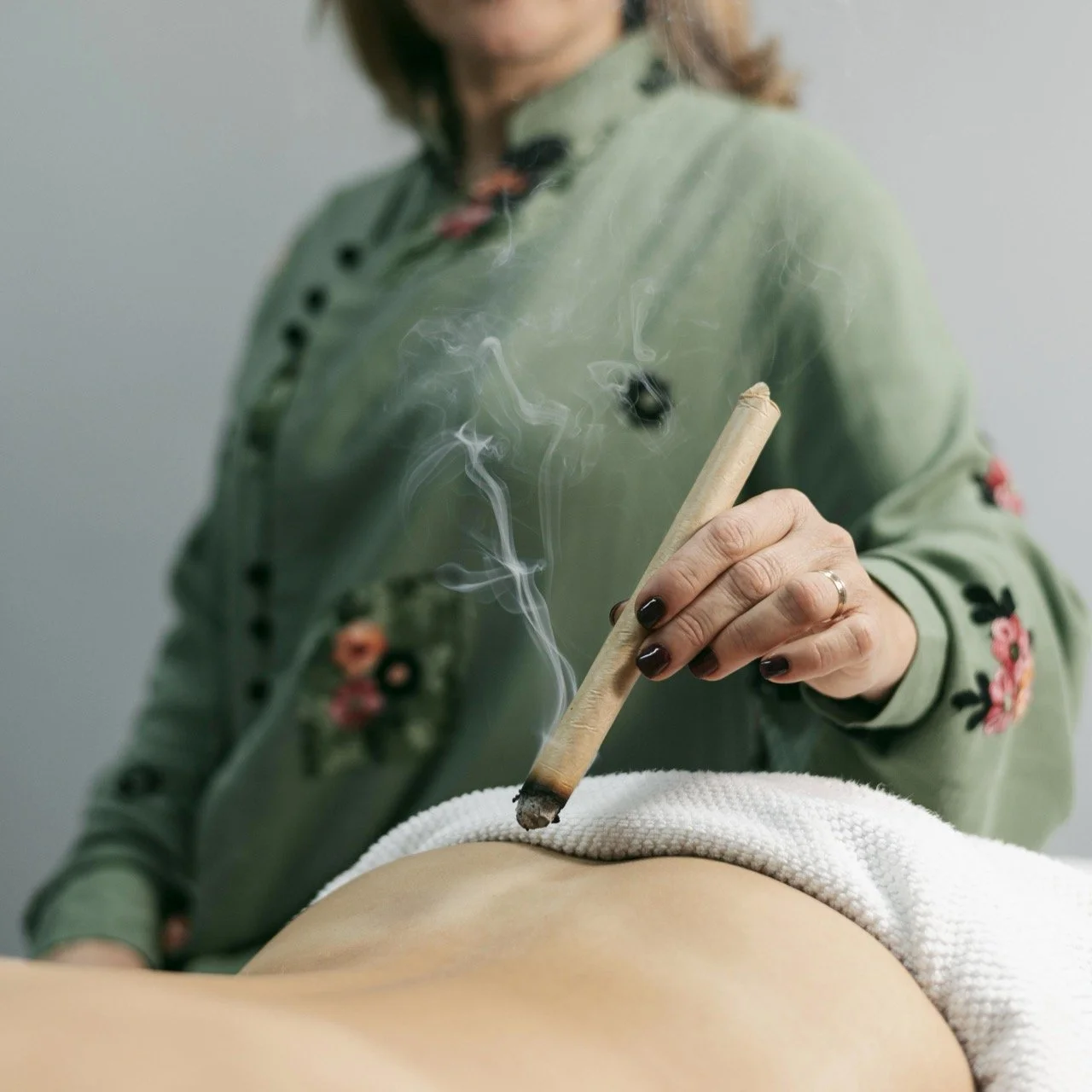
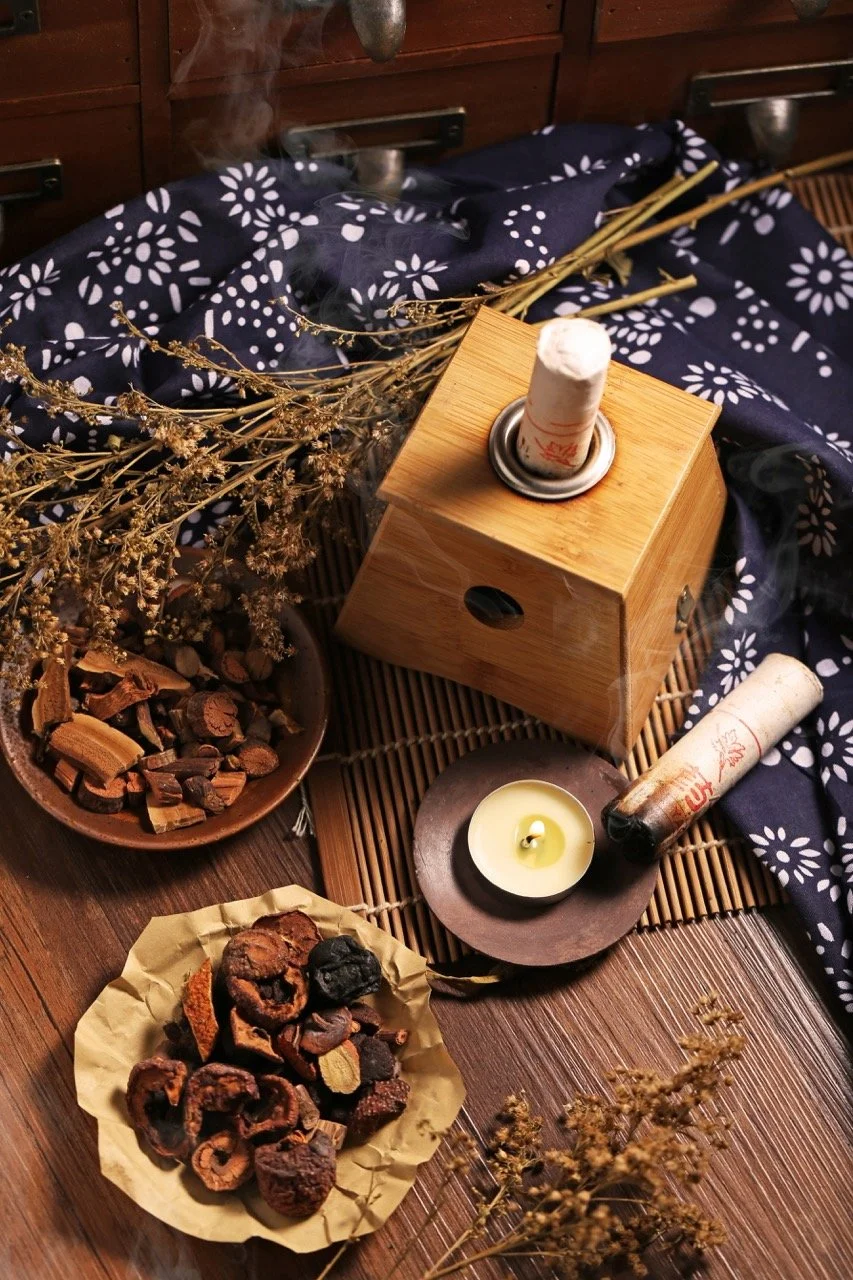
Moxibustion is a traditional Chinese therapy that uses the slow, sustained heat of burning moxa, a herb derived from dried mugwort, to warm specific points on the body. It's often used alongside acupuncture to support circulation, build energy, and restore balance where the body feels depleted or sluggish.
How it works
Warmth with purpose
In traditional Chinese medicine, moxibustion works through two connected principles: the meridian system and the properties of moxa itself. The meridians are the channels through which qi, your body's vital energy, flows. When that flow is blocked or weakened, the body struggles to maintain balance and health.
Unlike acupuncture needles or herbal medicines, moxibustion brings warmth directly into the body. That warmth is the key. It nourishes where there is depletion, moves where there is stagnation, and clears where there is accumulation. TCM practitioners consider it particularly effective for conditions rooted in cold, deficiency, or sluggish circulation.
Warm nourishing
Warms Yang energy, tonifies qi, nurtures blood, and supports the body through depletion and fatigue.
Warm dredging
Activates blood flow, dissolves stagnation, promotes qi movement, and relieves pain along the channels.
Warm melting
Reduces phlegm, eliminates stagnation, dispels dampness, and helps clear toxins from the body.
Conditions that moxibustion may address
TCM and Western medicine
Moxibustion is rooted in traditional Chinese medicine theory. While many clients report significant benefits, it's best understood as a complementary therapy. Your practitioner will discuss whether it's a suitable addition to your care plan at your initial consultation.
-
Yes, when carried out by a trained and qualified practitioner, moxibustion is considered safe for most people. Your practitioner will carry out a full consultation before your first session to make sure it's appropriate for you and to identify any contraindications.
-
Most clients describe a gentle, penetrating warmth that spreads from the treatment area. It's rarely uncomfortable. Many people find it deeply relaxing, and some even fall asleep during the session. If the heat ever feels too intense, your practitioner will adjust the distance or technique straight away.
-
Yes, it does. Burning moxa has a distinctive herbal, smoky scent that some people compare to incense or cannabis. Clinics that offer moxibustion regularly are usually well-ventilated to manage this, but it's worth knowing in advance, particularly if you're sensitive to smoke or strong smells.
-
This depends on what you're hoping to address. Some clients notice a difference after just one or two sessions, while others benefit from a longer course of treatment. Your practitioner will give you a clearer picture after your initial consultation, once they've assessed your individual needs.
-
Absolutely. In traditional Chinese medicine, moxibustion and acupuncture are frequently used together and are considered highly complementary. Your practitioner may recommend combining both therapies as part of a tailored treatment plan, particularly if you're dealing with a chronic or complex condition.