Cupping
Ancient therapy, modern results
Cupping therapy: how suction heals
Cupping is a time-tested therapy that uses suction to stimulate blood flow, ease muscle tension, and support your body's natural recovery processes. Practised for thousands of years and increasingly studied in modern research, it's a gentle, non-invasive treatment with a growing evidence base.
What does cupping actually do?
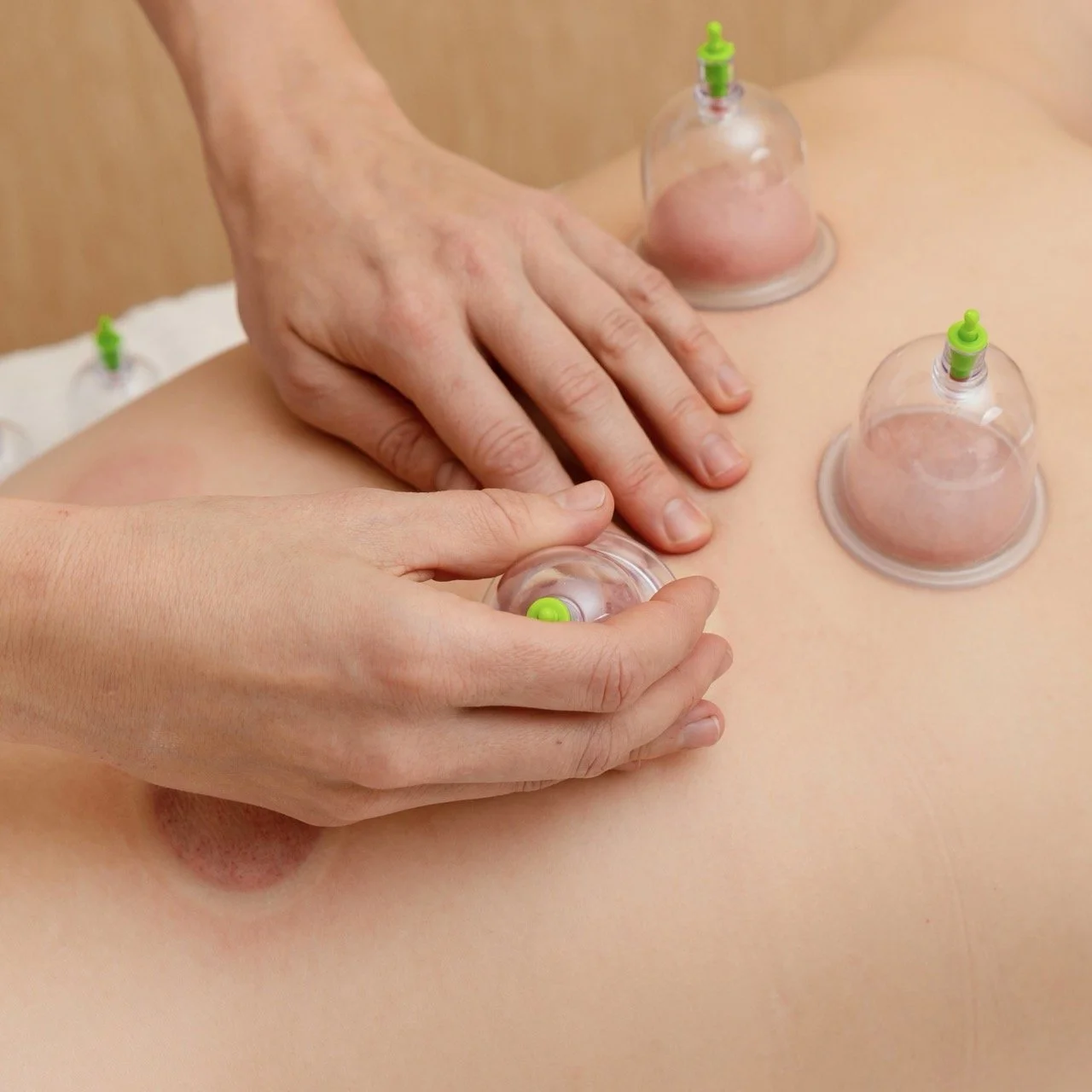
Cupping is thought to work by promoting blood circulation close to the skin's surface and supporting the immune system. The mechanical effect of the suction increases local blood flow and gently stretches the tissue beneath the skin, which can help reduce tension, ease pain, and accelerate recovery.
Research also points to the activation of a gene called heme oxygenase-1, which plays a key role in preventing vascular inflammation. This may help explain many of the wider health benefits people report from regular cupping treatment.
What it targets
Localised pain, inflammation, poor circulation, and immune function.
Discomfort level
Mild. Most clients describe a pulling or pressure sensation rather than pain.
After effects
Temporary circular marks on the skin are common and typically fade within a few days. Minimal - Most people feel little or no pain
Conditions cupping can address
A note on the evidence
While the existing research is promising, scientists acknowledge that more high-quality studies are needed to fully confirm cupping's mechanisms and benefits. No single theory yet explains all of its effects.
-
The short answer
Possibly, yes. Research suggests cupping may support the body's natural detoxification processes in a few different ways, though the evidence is still developing.
-
Cupping may help reduce levels of uric acid, a natural waste product from digesting certain foods. A build-up of uric acid can increase acidity in the blood and urine, so supporting its elimination is a potential benefit worth noting.
-
Your lymphatic system plays a central role in clearing waste from the body. When lymph flow is disrupted, fluid can build up and toxins accumulate. Cupping may help improve lymphatic circulation, similar in some ways to the effect of a lymphatic drainage massage.
-
By triggering a mild local inflammatory response, cupping appears to activate the immune system, both at the treatment site and more broadly throughout the body. This immune boost may contribute to the detoxifying effects some clients report.